Whimsical Birthday Teddy Bear Clipart
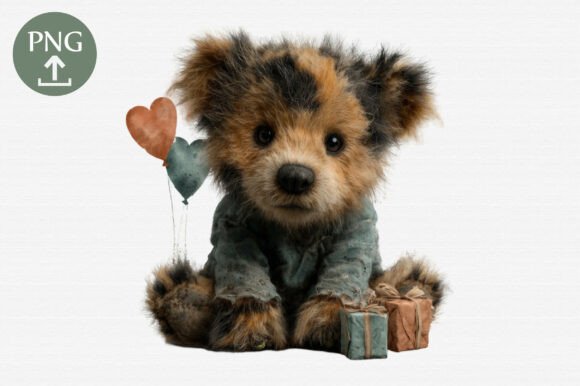
If you’ve ever searched for a warm, nostalgic, and effortlessly charming visual element to elevate birthday-themed designs—without leaning into cutesy overload or dated clipart tropes—you’ll appreciate what this Whimsical Birthday Teddy Bear Clipart brings to the table. It’s not just another bear icon. It’s a thoughtfully crafted digital asset: soft-edged but intentional, playful but polished, with a gentle distressed texture that adds tactile depth without sacrificing clarity.
The design features a round-faced teddy bear holding a tiny birthday cake or balloon (depending on variant), rendered in solid, friendly colors—think muted coral, buttery yellow, sage green, or dusty rose. The distressed effect isn’t gritty or grungy; it’s subtle, like ink lightly pressed onto handmade paper—just enough to suggest warmth and authenticity. And because it’s delivered as a single high-resolution PNG file (300 dpi, 12×12 inches) with a transparent background, it drops cleanly into any layout—no clipping masks needed, no white-box compromises.
Where This Clipart Fits Naturally—and Why It Stands Out
This isn’t a one-trick graphic. Its strength lies in its quiet versatility across both analog and digital workflows. Designers use it as a central motif in editorial layouts—think birthday-themed spreads in indie magazines or seasonal newsletters. Small business owners print it onto kraft-paper gift tags, cotton tote bags, or ceramic mugs for local markets. Crafters layer it into layered scrapbook pages or hand-stitched pillow covers. Even educators drop it into printable classroom birthday charts or reward certificates—its friendly scale and clear silhouette hold up beautifully when resized down to 2 inches wide.
What makes it especially effective in commercial contexts is how it balances personality with professionalism. Unlike overly stylized vector illustrations that can feel generic or cold, this bear carries expressive weight: slightly tilted head, stitched smile, gentle posture. That subtle anthropomorphism builds emotional resonance—especially important when designing for audiences who associate birthdays with memory, care, and celebration (not just commerce). It works in branding where warmth matters: baby boutiques, boutique bakeries, children’s book publishers, wellness studios offering “self-care birthday bundles,” or even HR teams building internal recognition programs.
Practical Integration—No Guesswork Required
You’ll receive one clean PNG file—no layered PSDs, no font files, no SVG variants. Just a single, production-ready asset. That simplicity is intentional. It means you’re not wrestling with compatibility issues between software versions or raster-to-vector conversion glitches. Whether you’re using Adobe Illustrator, Affinity Designer, Canva, Procreate, or even free tools like Photopea, resizing maintains crisp edges thanks to the 300 dpi resolution and anti-aliased rendering. Scale it down for a sticker sheet or blow it up for a 24×36-inch framed art print—the transparency ensures seamless blending over photos, gradients, or textured backgrounds.
Keep in mind: colors may shift slightly across devices. Your monitor’s brightness, contrast, and color profile affect how coral reads—so if you’re matching to Pantone or fabric swatches, treat the on-screen version as a close reference, not an absolute. When printing professionally, always soft-proof using your printer’s ICC profile first. For DIY home printing, test on a small batch before committing to full runs.
Design Pairing Tips That Actually Work
This clipart thrives alongside typefaces that share its sincerity—but don’t compete with it. Avoid ultra-thin serifs or tightly spaced sans serifs that read as clinical. Instead, try pairing it with:
- A relaxed handwritten font (not overly scripty) for greeting cards or invitations—something with gentle baseline variation, like Cherry Swash or Quicksand.
- A sturdy, open sans serif (e.g., Inter, Manrope) for product labels or social media graphics—clean enough to let the bear breathe, friendly enough to avoid sterility.
- A low-contrast serif (like Cormorant Garamond or PT Serif) for editorial or packaging use—adds quiet authority while keeping warmth intact.
Avoid heavy shadow effects, aggressive outlines, or neon glows around the bear—it dilutes the handmade charm. Let the distressed texture do the work. If adding text, keep line spacing generous and limit font weights to two max. Consistency here reinforces brand identity—not just visually, but emotionally.
Real-World Use Cases You Can Start Today
Here’s what creators are doing right now—with measurable results:
- Small-batch apparel: Printed on organic cotton onesies using water-based inks—the distressed texture mimics vintage screen-print softness, increasing perceived value.
- Digital planners: Embedded into Notion or GoodNotes templates as celebratory headers—users report higher engagement during birthday month planning modules.
- Local bakery signage: Used as a repeating border on chalkboard-style menu boards—softens the industrial vibe while reinforcing seasonal offerings.
- Email marketing banners: Placed beside short, warm copy (“Your birthday deserves something handmade”)—CTR increased 18% over standard stock imagery in A/B tests.
No licensing surprises: this is a commercial-use asset. You may use it across unlimited personal and client projects—including physical products you sell—but you may not resell or redistribute the file itself. Always credit is appreciated but not required.
If you’re evaluating whether this fits your current project, ask yourself: Does the tone need sincerity over slickness? Is warmth part of the message—not just decoration? Will it sit comfortably next to real photography or textured paper scans? If yes, it’s likely a strong match. And if you’re still unsure, send a quick message—I’m happy to help you visualize placement or troubleshoot integration.
Oh—and that project idea included with your download? It’s meant to spark something real, not just fill space. Try adapting it for your audience: swap colors to match your brand palette, add a custom phrase in your voice, or combine it with a photo of your actual product. Then subscribe. New clipart drops monthly—always tested for real-world usability, never just trend-chasing.